
Write a project brief
Name three projects you want to complete in the next few months. Be specific: a storage box, a shelf or repairing a piece of furniture is more useful than “learn woodworking.” Identify the tasks each project involves and what you can reasonably learn or obtain help with.
Choose projects suited to your experience. A workshop does not need to be fully equipped on day one. A clear project brief helps separate the essentials from purchases inspired by someone else’s room.
Map your existing space
Record the dimensions in feet and inches, mark windows and doors, and note fixed services and equipment. Include access for materials and finished projects. Decide whether the room must also hold a car, garden supplies or household storage.
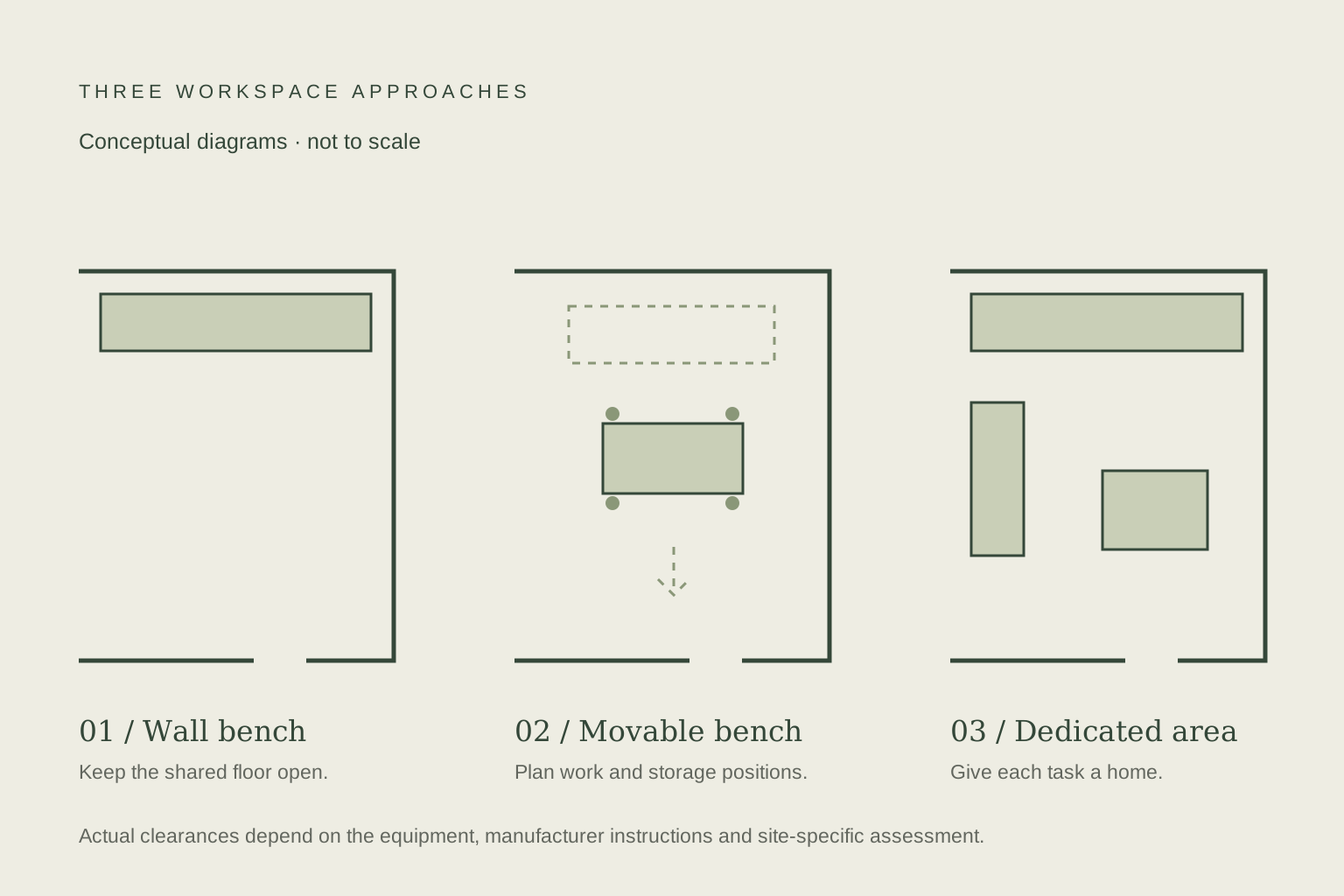
Draw the available area after those commitments. Do not assume every remaining square foot can hold a tool. Work happens around equipment, and required clearances depend on the manufacturer and the task. Compare the three small-workshop approaches before choosing your bench.
Create three budget columns
Use “needed now,” “resolve first” and “later.” Needed now contains items tied to the first project. Resolve first covers issues such as suitable electrical service, dust controls or professional advice. Later contains desirable equipment that is not necessary for the immediate work.
Estimate the total using current US prices, tax, delivery and any installation costs. Do not rely on an old supplier list or a headline budget. A guide can help structure decisions, but actual costs depend on your room, equipment and location.
Evaluate a tool before a deal
Consider whether the tool fits your projects, whether suitable instructions and support are available, and whether your space can accommodate its use. Look at current specifications and the manufacturer’s requirements. A discount does not solve a mismatch.
Used equipment may require inspection and knowledge beyond a beginner’s experience. If you cannot assess condition or missing components, seek qualified help. Keep a written list of what you need so that a sale does not become the main reason to buy.
Set aside the technical questions
Write down electrical, ventilation, dust, noise and building-use questions before setting up equipment. Obtain advice from qualified professionals where appropriate. Do not copy a photograph’s electrical arrangement or assume ordinary household storage addresses workshop hazards.
Our articles focus on planning and organization. They do not replace the equipment manual, training, local requirements or a site-specific assessment. The OSHA woodworking resources provide background on common hazards.
Build in stages
Start with the simplest suitable setup for the first project. After completing it, note which tasks were awkward and which purchases were unused. Change the layout or add equipment to solve an observed problem rather than expanding automatically.
Use the planning checklist to capture measurements, priorities and unresolved questions. Revisit the budget after each stage. A workshop becomes more useful as it reflects the projects you actually do.
Planning notes & sources
For equipment clearances and technical setup, follow manufacturer instructions and the requirements for your own home.
OSHA: Woodworking hazards and solutions