Choose one job for the space
An empty corner does not need to become another place to store things. Begin with a recurring inconvenience: mail left on a table, a craft project packed away every evening, or everyday bags without a landing spot. A small space becomes useful when it removes one of those frictions.
Choose a primary purpose and keep the first version simple. An entry station might need hooks, a narrow surface and a tray. A creative corner might need task lighting and a closed cabinet. Combining too many purposes can make a compact space harder to use.
Measure the route as well as the furniture
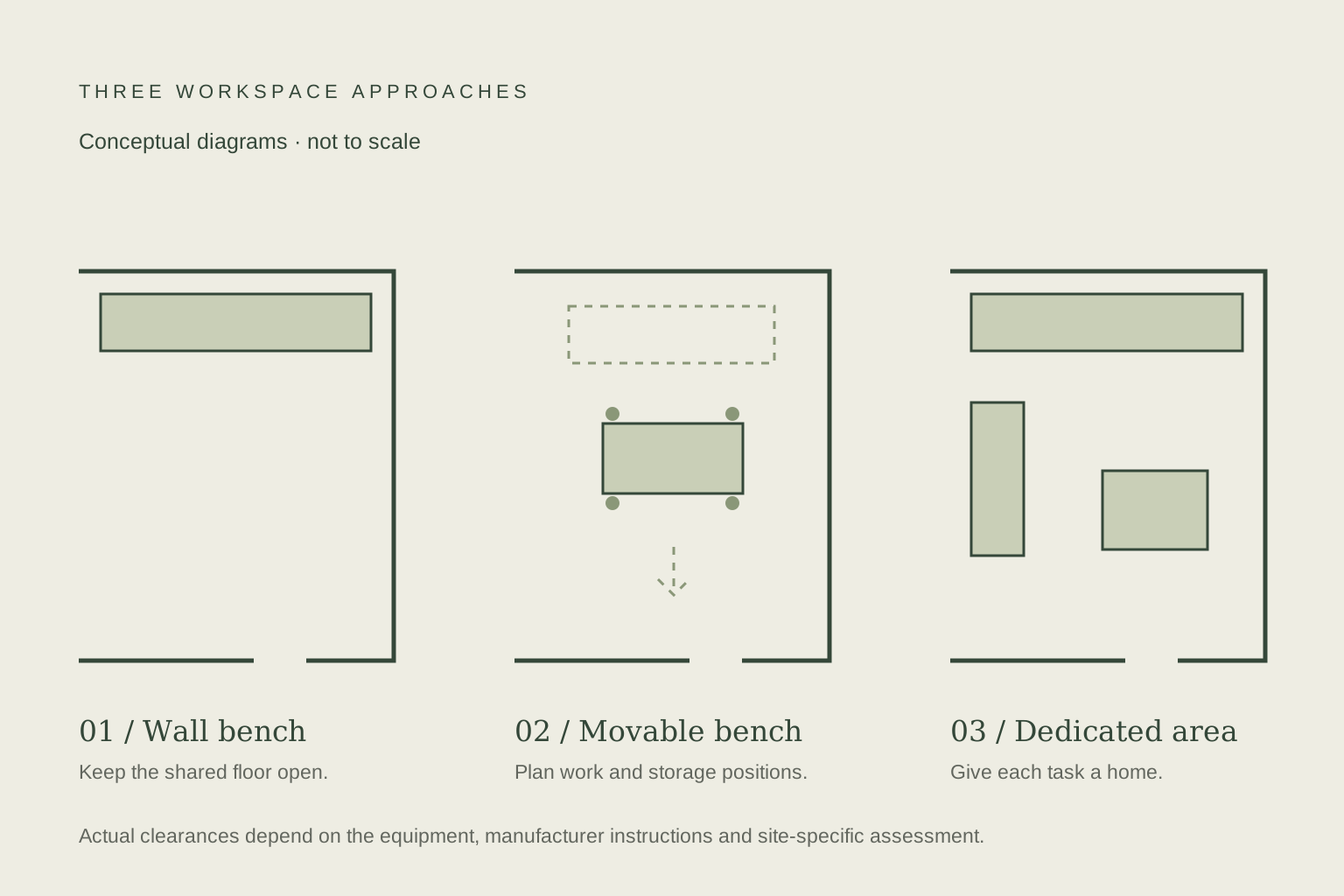
Mark the furniture footprint with removable tape and live with it for a day. Open nearby doors, carry a bag through the route and check how the arrangement feels from adjacent rooms. Keep exits and access to building equipment unobstructed.
Measure what you already own before buying new furniture. A cabinet that fits a wall may still feel too deep beside a doorway. A work surface can fit physically but lack room for a chair or for the task performed there. Those everyday movements are part of the plan.
Repeat a few materials
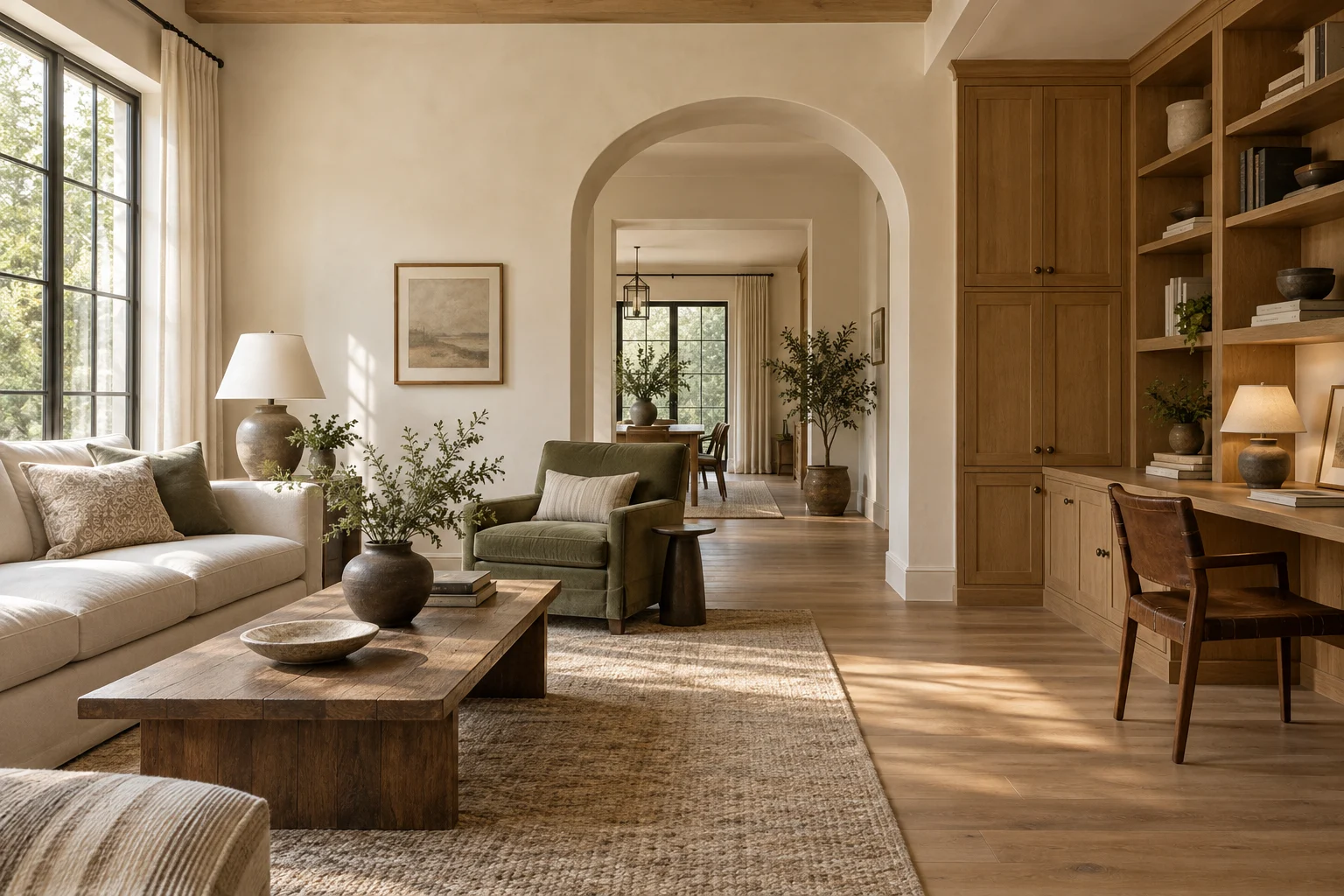
Use a small palette connected to the nearby room: the same wood tone, a related wall color or a repeated metal finish. This makes a functional addition feel intentional without buying a matched set.
Closed storage can simplify a visually busy area. Open shelves work best when their contents are easy to return to a defined place. Choose the storage style around the items and your maintenance habits, rather than a photograph alone.
Separate clean activities from messy ones
A writing, sewing or paper-craft corner is different from a woodworking area. Activities that create dust, fumes or substantial noise need a separate assessment. An attractive interior corner should not be repurposed for machinery just because a bench fits.
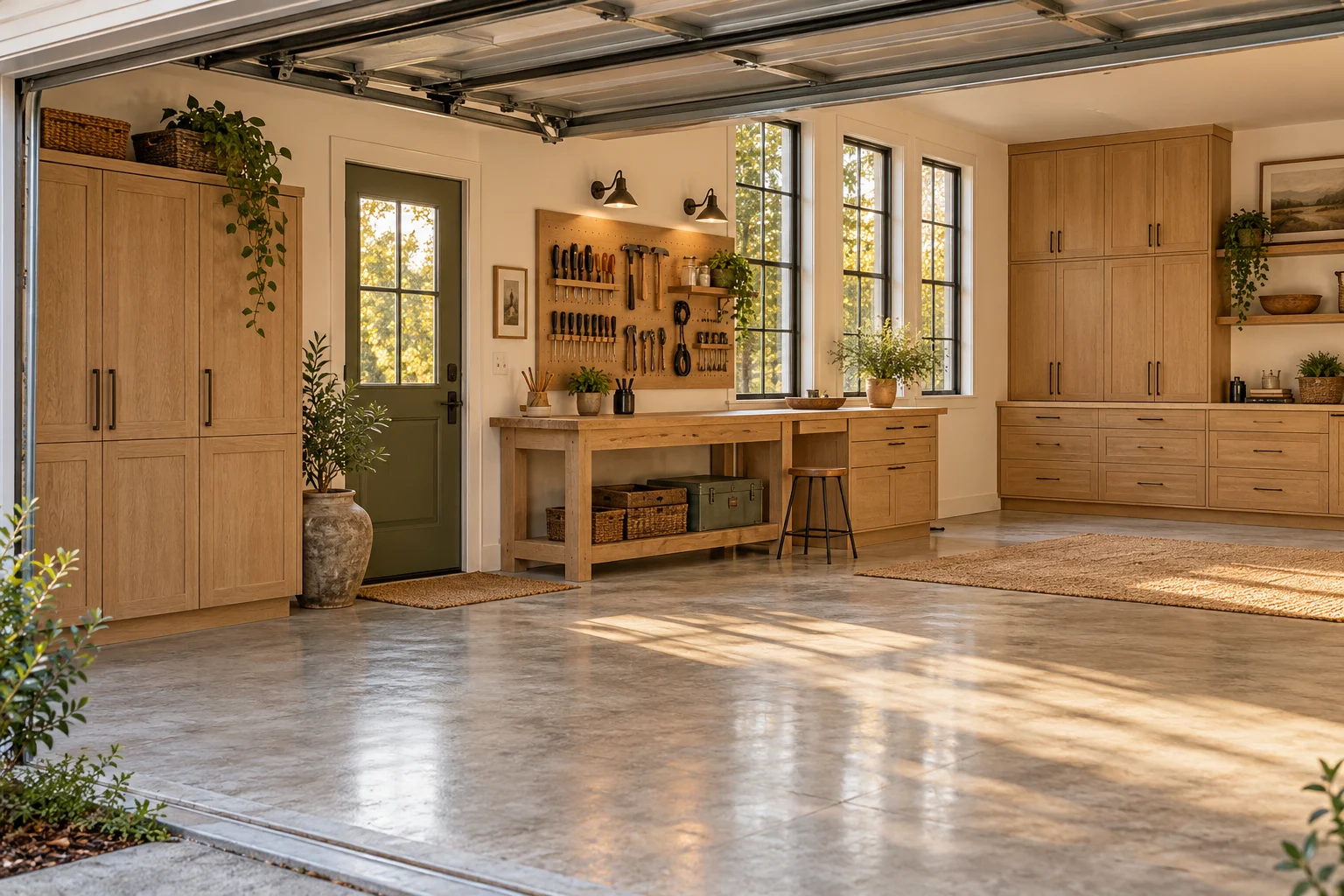
For a garage-based project area, read our garage organization guide. Consider household members, ventilation needs, manufacturer instructions and the suitability of the room before introducing equipment or materials.
Test before making it permanent
Use a lamp, surface and storage piece you already own to try the arrangement. Keep notes for a week: what gets used, what blocks the route, and what is still left elsewhere. Then change the least effective element.
For a utility corner, a basket may be enough. For a hobby station, the most valuable change may be keeping materials together rather than adding furniture. Avoid buying a full system until the small version has earned its place.
Make maintenance part of the design
Leave a little unassigned space so that putting things away is easy. If every shelf requires careful stacking, the room may look complete but be difficult to maintain. Keep labels clear and place the most frequently used items where they can be returned with one movement.
A useful space belongs to the home in both appearance and habit. The goal is a corner that helps on an ordinary weekday and still looks calm from the room beside it.
Planning notes & sources
For equipment clearances and technical setup, follow manufacturer instructions and the requirements for your own home.